Showing posts with label muslims. Show all posts

Monday, January 11, 2016

Cathedrals of the Roman Catholic

Roman Catholic Churches in India 
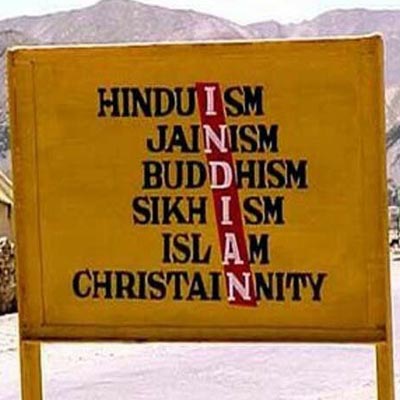
We as Indians gie respect to any religion and welcome everyone with great love and support. 


St. Catherine's Cathedral in Old Goa.

Sacred Heart Cathedral in New Delhi.

St Joseph's Cathedral in Hyderabad.

Our Lady of the Rosary Cathedral on Mangalore

St. Philomena's Cathedral in Mysore

St. Xavier's Cathedral in Kottar

Our Lady of Lourdes Cathedral in Thrissur

Immaculate Conception Cathedral in Pondicherry

St. Mary's Cathedral in Punalur

St. Michael's Cathedral in Kottapuram

Cathedral of the Immaculate Conception in Agra

Cathedral of the Sacred Heart in Asansol

Cathedral of Our Lady of the Family Rosary of Fátima in Belgaum

St. Mary's Cathedral in Varanasi

St. Francis Assisi Cathedral of Verapoly

Mary Help of Christians Cathedral in Kohima

St Mary's Metropolitan Cathedral in Changanassery

Immaculate Heart of Mary Cathedral in Kottayam

St. Patrick's Cathedral in Poona

St. Joseph's Cathedral in Jamshedpur

St. Thomas Cathedral in Irinjalakuda

St. Joseph's Cathedral in Trivandrum

St. Francis Xavier's Cathedral in Bangalore

Sacred Heart Cathedral in Shimoga

Prem Mandir, cathedral of Rajkot


Sunday, December 27, 2015

Ramayana


Ramayana was originally written by a sage Valmiki in the Sanskrit language and later on it was translated into other languages in different versions. The main story of the Ramayana is about Lord Rama. In short the Ramayana is about Rama who was born in a royal family and was supposed to be the king, but because of his step- mother, he was forced to exile from his kingdom for fourteen years. During this period his consort Sita was kidnapped by a demon called Ravan, who was the king of Lanka. Rama with the help of his brother, Lakshman, and an army of monkeys under the leadership of Hanuman, rescued Sita.


But the Ramayana isn't only about Lord Rama and his attempt to rescue his consort Sita. Ramayana is also about devotion, loyalty, family roles and respect to elders. The Ramayana does not begin with the life of Rama, but actually with the people on earth who suffer from the demon named Ravan. Ravan is a cruel king who terrorizes the people of earth, especially the religious people and prevents them from performing religious rituals. But Ravan is also a great devotee of the three Gods who rule the universe, Brahma; the creator, Vishnu; the preserver and Shiva; the destroyer and therefore has their blessings and assurance that they as Gods will not hurt him. But the people of the earth, who suffer from Ravan, go up to heaven to visit the Gods and ask for their help. The Gods decide that Lord Vishnu will incarnate as a human being on earth and destroy Ravan. They find out that king of Kosala named Dasrath who has three wives is childless and longing for heir. So Lord Vishnu incarnates as his older son.

The king's first wife Kausalya gives birth to Rama. His second wife gives birth to Lakshman and Shatrugan and his third wife Kaykeyi gives birth to Bharat. The four brothers are sent for education in an ashram. They four brothers were very close to each other even though they were stepbrothers. They return to their kingdom after completing education.

Rama gets married to Sita. Sita is an adopted daughter of another king. In order to win her hand, the contestant had to bend a bow, which belonged to Lord Shiva. Many could not even lift this bow. When Rama arrived he did not only bend this bow but also broke it and so got Sita's hand.

King Dasrath intended to inherit his kingdom to his eldest son, Rama. But Bharat's nanny gets jealous and goes to Bharat's mother and begins to incite her about what might happen of her if Rama becomes the king. Incited, Bharat's mother goes to the king and demands from him the two boons he had promised her sometime earlier in life. She demands to send Rama to exile in the forest for fourteen years and make her son Bharat the heir of the kingdom. King Dasrath who is in great dilemma and pain, eventually bows to her demands.

Rama accepts his father's decision without any argument, but the other brothers including Bharat get furious. Lakshman decides to join his brother in exile and so giving an example of brotherly loyalty. Bharat inherits the throne but after his father's death goes to Rama and tries to convince him to return. Bharat tell Rama that because he is the eldest son of the king he is the rightful heir of the throne but Rama refuses and claims that father boons should be respected. Bharat agrees to remain the ruler of the kingdom until Rama's return from exile and as a symbol to prove that the throne belongs to Rama he takes Rama's slippers and puts them on the throne.

The forest in which Rama arrived with his wife Sita and his brother was full of demons. A female demon, Surpanakha fall in love with Rama and she tries to seduce him. Rama being a loyal husband refuses to her flirts, so she tries to kill Sita. At this point Lakshman takes his sword and cuts the demon's nose. She goes to her brother, Ravan, and tells him of the disgrace that happened to her. Ravan decides to avenge this humiliation by kidnapping Rama's wife Sita. He even notices that she is very beautiful and desires her.

Ravan plans ways to far away Rama and Lakshman from Sita so that he can kidnap her. One day Sita sees a very beautiful deer and desires it. She urges Rama to get it so Rama goes deep into the forest to get it. As time passes and Rama does not return, Sita starts to get worried. After some time she hears a cry which she thinks is Rama's cry so she begs Lakshman to find Rama. Lakshman aware of the fact that something bad might happen to Sita, refuses to leave Sita alone. But Sita compels Lakshman to find Rama. Lakshman agrees but draws a line in front of their hut and begs his sister- in- law not to pass this line because it might be dangerous and sets off to search Rama.

When it is quiet dark a sage comes to the hut begging for food. Sita hears the begging of the sage and brings some food for the sage and so passes the line Lakshman had marked. When she gets closer to the sage she finds out that the sage is actually Ravan in disguise. Ravan kidnaps Sita and takes her to his kingdom Lanka. And so this basic plot of the Gods to have Rama to fight with Ravan takes place. On his way to Lanka, Sita struggles with him a lot, A vulture, who resides near Rama's hut, hears her cries and fights with Ravan. Ravan injures that vulture seriously. When Rama and Lakshman return, the vulture who is dying tells them that Ravan kidnapped Sita. Rama and Lakshman decide to find out Sita.

Rama and Lakshman need an army to find and fight Ravan and they get this help from the monkeys. The king of monkeys who was exiled by his brother gets Rama's help to fight and slain his brother. After regaining his throne the monkey king assigns one of his commanders, Hanuman to serve Rama in his assignment to find Sita. After some time the monkeys come across another vulture who tells them that Ravan has kidnapped Sita and taken her to his island kingdom, Lanka.

Hanuman who is capable of flying gets to Lanka after fighting some dangers in the way. He finds Sita in the garden guarded by female demons, in a depressed mood. He proves to her that he is Rama's messenger and offers to carry her back. But to vindicate her honor she prefers that Rama himself should rescue her. Hanuman promises that Rama will come and rescue her.

Hanuman decides to check the capability of Ravan's security forces. He begins to destroy the garden, provoking the security guard and hurting them. Eventually he is captured and brought to Ravan. Hanuman tells Ravan that he is Rama's messenger and demands from him to free Sita or else he will die. Ravan gets furious and at first intended to kill Hanuman, but because Hanuman is a messenger he decides only to punish him by burning his tail. Hanuman flies back to Rama not before setting fire to Ravan's city with his burning tail and extinguishes his tail in the sea.

After Hanuman's return, Rama plans his way to reach Ravan's island. Rama and his advisers plan a land bridge to Lanka. The monkeys bring tree and rocks from the forests and build the land bridge to Lanka. After arriving in Lanka they send a peaceful messenger to Ravan, but Ravan refuses. So a war begins in which both sides lose many forces. Even Rama and Lakshman get hurt. The monkeys also began to get weak because Ravan's forces use biological weapons, which weaken their senses. So a medical expert in Rama's forces claims that to neutralize this a special herb is required which exists in a far away mountain, named Mahodaya.

Hanuman flies to that mountain and finds out that the mountain is full of different herbs, so he brings the whole mountain to Lanka. Slowly the forces get back to their senses.

Eventually after many battles Ravan faces Rama and after two continuos days of battles Rama kills Ravan and visits Sita. But the Ramayana does not end here. The fact that Sita lived in another man's palace causes some rumors about her chastity. She is obliged to take a fire test in which she sits in a fire but comes out unharmed and therefore is purified from charges.

In the original version of the Ramayana, after Rama and Sita return to Ayodhya, the capital of Kosala the rumors about Sita's adultery in Ravan's captivity continue and therefore the people disrespect her. So Rama, who is now the king, decides to banish Sita from his kingdom. In the forests she meets a sage named Valmiki, who later on wrote the Ramayana. In Valmiki's ashram Sita gives birth to two twins of Rama, Lav and Kush. These two children learn from Valmiki to sing the Ramayana as a poem and they go everywhere and start telling everyone the Ramayana, meaning Rama's story. They even arrive into Rama's court and tell him his story and so Rama recognizes his sons. He brings back his wife Sita who decides to prove her loyalty to Rama by asking Mother Earth to swallow her if she was loyal to Rama and so Mother Earth to testify her loyalty, opens up and swallows her and Sita disappears into earth. Later on Rama himself jumped in the river to end his life, followed by many.

The Religious form of Caste System


In Hinduism there exists four castes arranged in a hierarchy. Anyone who does not belong to one of these castes is an outcast. The religious word for caste is 'Varna'. Each Varna has certain duties and rights. Each Varna members have to work in certain occupation which only that Varna members are allowed. Each Varna has certain type of diet.

The highest Varna is of the Brahman. Members of this class are priests and the educated people of the society. The Varna after them in hierarchy is Kshatria.


The members of this class are the rulers and aristocrats of the society. After them are the Vaisia. Members of this class are the landlords and businessmen of the society. After them in hierarchy are the Sudra. Members of this class are the peasants and working class of the society who work in non-polluting jobs. The caste hierarchy ends here. Below these castes are the outcasts who are untouchable to the four castes. These untouchables worked in degrading jobs like cleaning, sewage etc.

The first three castes had social and economical rights which the Sudra and the untouchables did not have. The first three castes are also seen as 'twice born'. The intention in these two births is to the natural birth and to the ceremonial entrance to the society at a much later age.

Each Varna and also the untouchables are divided into many communities. These communities are called Jat or Jati (The caste is also used instead of Jat). For example the Brahmans have Jats called Gaur, Kokanastha, Sarasvat, Iyer and others. The outcasts have Jats like Mahar, Dhed, Mala, Madiga and others. The Sudra is the largest Varna and it has the largest number of communities. Each Jat is limited to professions worthy of their Varna. Each Jat is limited to the Varna diet. Each Jat members are allowed to marry only with their Jat members. People are born into their Jat and it cannot be changed.

This is the how the caste system is supposed to be in its religious form. But in reality it is much more complicated and different from its religious form.

Vedic Period


The Vedic Period is one of major milestones in the history of India. It is estimated that the Vedic Period in India lasted from 1500 - 600 B.C. This period brought about a multitude of changes in the lifestyle of people. The Vedic age is broadly classified into two categories: Early Vedic Age and Later Vedic age. There was development in agricultural practices, worshipping patterns, philosophical outlooks, etc. A number of dynasties and new religions came into being during this period that left a huge impact on people. Read on the history of the Vedic Age.

The migration of the Aryans to the Indian sub continent is what triggered off the Vedic Age. As the name suggests, this period got its name from the four major Vedas or the sacred scriptures that were created during that time. The four sacred Vedas are Rig Veda, Sama Veda, Yajur Veda and Atharva Veda. These scriptures provide essential knowledge of the lifestyle during the Vedic Age. The Vedas are the foundation of the Hindu religion. Apart from the Vedas, we have two great epics, Ramayana and Mahabharata written during this age. These two epics tell a lot about the culture, society, religious beliefs, etc. of people during that time.

Vedic Religion
The Vedic period religions laid the foundation of the religious practices that are continued till date in modern India. These religions arose from the sacred scriptures that were composed during the Vedic period. These scriptures founded the very base of Hinduism in India. The scriptures that talk of the various religious practices are basically the four Vedas namely Rig Veda, Yajur Veda, Sama Veda and Atharva Veda.

Vedic Culture
The Vedic period has been broadly classified into two categories: the Early and Later Vedic Periods. This has been done according to the way the transition in the style of culture and society took place. The Vedic period society developed rapidly as time passed by. In Vedic age, culture and society developed from the crude form to the refined form as more and more people came to settle and started to contribute their own ideas to reform the society.

Hinduism


Hinduism is a religion with various gods and goddesses. According to Hinduism, three Lords rule the world. Brahma: the creator; Vishnu: the preserver and Shiva: the destroyer. Lord Vishnu did his job of preserving the world by incarnating himself in different forms at times of crisis.


The three Lords that rule the world have consorts and they are goddesses. Consort of Brahma is Sarasvati; goddess of learning. Vishnu's consort is Lakshmi; goddess of wealth and prosperity. Shiva's consort is Parvati who is worshipped as Kali or Durga.
Along them there are a number of other gods and goddesses. To name a few of them, there is Ganesh, who has an elephant's head and he is also a son of Shiva and Parvati. Hanuman, who is an ape. Surya, Lord of sun. Ganga Ma, goddess of river Ganges. Samundra, Lord of the sea. Indra, king of the gods ( but he isn't an important god). Prithvi, goddess of earth. Shakti, goddess of power. The Hindus call their goddesses 'Ma' meaning mother.

Some gods have more than one name. Shiva is also known as Shankar, Mahadev, Natraj, Mahesh and many other names. Ganesh is also called Ganpati. God Vishnu incarnated 9 times to do his job and in his every appearance he had a different form which are also worshipped as gods. Among his appearances, he appeared as Rama, Krishna, Narsimha, Parsuram and Buddha. Krishna also has different names, Gopal; Kishan; Shyam and other names. He also has other titles with meanings like 'Basuri Wala' which means the flute musician and 'Makhan Chor' which means the butter stealer. There are also gods who can change their forms, for example: Parvati can change into Kali or Durga.

Not all of these gods are worshiped by all Hindus. Some Hindus worship only Vishnu. Others worship only Shiva. Others worship only the goddesses and call these goddesses collectively as Shakti meaning power. Many of these goddess worshipers worship Parvati in her images as Kali or Durga. People who worship Shiva or Vishnu also worship characters and images connected with these gods. Vishnu worshipers (Vaishnaites) also worship his appearances. Shiva's worshipers (Shaivites) also worship images of bull called Nandi, who was Shiva's carrier and a unique stone design connected to Shiva. There are also Hindus who worship all the gods. There are some gods who are worshiped all over India like Rama and Krishna and other gods who are worshiped more in one region than the other like Ganesh who is worshiped mainly in west India. Hindus also worship gods according to their personal needs. People who engage in wrestling, body building and other physical sports worship Hanuman, who in Hindu legends was an ape with lot of physical strength. Businessmen worship Lakshmi, goddess of wealth.

Though Hindus worship different idols, many Hindus believe in one God and perceive in these different gods and goddesses as different faces of the same one God. Others believe that idolatry is the wrong interpretation of Hinduism.


Hindus believe in reincarnation. The basic belief is that a person's fate is determined according to his deeds. These deeds in Hinduism are called 'Karma'. A soul who does good Karma in this life will be awarded with a better life in the next incarnation. Souls who do bad Karma will be punished for their sins, if not in this incarnation then in the next incarnation and will continue to be born in this world again and again. The good souls will be liberated from the circle of rebirth and get redemption which is called 'Moksha' meaning freedom. Hindus normally cremate their dead ones, so that the soul of the dead would go to heaven, except in a few cases of Hindu saints, who are believed to have attained 'Moksha'.

The main Hindu books are the four Vedas. They are Rig Veda, Sama Veda, Yajur Veda and Atharva Veda. The concluding portions of the Vedas are called Upanisads. There are also other holy books like Puranas, Ramayana, Mahabharta etc. The different gods and goddesses in the Hindu mythology are derived from these books. Ramayana and Mahabharta are the most popular Hindu books.

The main story of Ramayana is the story of Lord Rama. Rama was born in a royal family and was suppose to be the king, but because of his step- mother, he was forced to exile from his kingdom for fourteen years. During this period his consort Sita was kidnapped by a demon called Ravan, who was king of Lanka. Rama with the help of his brother, Lakshman, and an army of monkeys under the leadership of
Hanuman, rescued Sita. Many Indians believe that the present day Sri Lanka was then the kingdom of Lanka.

Mahabharta is a family epic. In this epic the Pandva family and the Kaurav family who are cousins fight with each other for the control over a kingdom. Kaurav family, which consisted of 100 brothers rule an empire. The five Pandva brothers ask for a small kingdom which belongs to them. The Kauravs refuse to give the Pandvas the kingdom so there is a war between the Pandvas and the Kauravs in which it is believed that all the kingdoms of that period in India took part. In this war the Pandvas, with the help of Lord Krishna win the war. Before the commencement of the war, while the two armies are facing each other, one of the Pandva brothers Arjun gets depressed. Arjun is depressed because he has to fight against people whom he knows, loves and respects. At this point Krishna, (who was also a king of a kingdom, and participated in this war only as the chariot driver for Arjun) convinces Arjun to fight. Krishna lectures Arjun about life, human beings and their religious duties. He explains to Arjun that he belongs to a warrior caste and he has to fight for that's his destination in this incarnation. Those chapters in the Mahabharta which are Krishna's discourses on religious philosophy are called Bhagvad Gita. Because of it's importance the Bhagvad Gita is considered as a separate holy book. Another Hindu holy book that deals with religious duties is 'Law of Manu' or the 'Dharma Shastra'.

In the wars that occur in the holy books, as in Mahabharta, the different sides had different war weapons which had characters similar to modern day war weapons. In some stories the traveling vehicles were normally birds and animals. But these animals and birds had features similar to modern day aircrafts. There were even aircrafts with over velocity of light. The main war weapons were bows and arrows. But these arrows were more like modern missiles than simple arrows. These arrows were capable of carrying bombs with destructive power similar to modern day chemical, biological or even atom bombs. Other arrows could be targeted on specific human beings. There were even arrows capable of neutralizing other arrows, similar to modern day anti-missiles.

Hindus have many holy places. Badrinath, Puri, Dwarkha and Rameshwaram are four holiest places for the Hindus. Other holy places are Varanasi, Rishikesh, Nasik, Pushkar, Ujjain and other places. Some rivers are also holy to them. Among them are Godavri, Yamuna and above all Ganges which the Indians call Ganga. Another holy river is Sarasvati and it is invisible. Hindus also worship and respect some animals and birds like cobra, apes, peacocks and cow. Hindus also respect some trees and bush trees. The famous and the most respected bush tree is Tulsi.

Some of the Hindu customs, which exist or existed, do not have their bearing in Hindu scriptures but became part of Hinduism in different ways and fashion. For example, the Hindus see in cow a sacred animal. Religiously there is no reason to see cow as sacred and it is believed that cows were made 'sacred' to prevent their slaughter during periods of droughts and hunger. Cobra worship also is not found in Hindu scripts. This custom became part of Hinduism when some Indian tribes who use to worship cobra adopted Hinduism. Burning of the widow on the dead husband's pyre also has no religious justification. This custom, outlawed in 1829, was probably brought to India by the Scythians invaders of India. Among the Scythians it was a custom to bury the dead king with his mistresses or wives, servants and other things so that they could continue to serve him in the next world. When these Scythians arrived in India, they adopted the Indian system of funeral, which was cremating the dead. And so instead of burying their kings and his servers they started cremating their dead with his surviving lovers. The Scythians were warrior tribes and they were given a status of warrior castes in Hindu religious hierarchy.

The different castes who claimed warrior status or higher also adopted this custom.
There are four castes in Hindu religion arranged in a hierarchy. The highest caste is Brahman, and they are the priest caste of Hinduism. After them are the Kshatria, who are the warrior castes. After them are the Vaishya caste , who are business people. And after them are the Sudra, who are the common peasants and workers. Below these four castes there are casteless, the untouchables. The four castes were not allowed to have any physical contact with the untouchables.

Each caste is divided into many sub-castes. The religious word for caste is Varna and for sub-caste Jat or Jati. But sometimes in English the term caste is used in both cases. Religiously, people are born in a caste and it cannot be changed. Each caste has some compulsory duties, which its members must do. Each caste has professional limits which decides what profession each caste can follow. Each caste members can have social relations only with its caste members. Religiously this includes marraige and even eating only with caste members. Please note that socially the caste system is different from the religious form of caste system.

How did Hinduism originated is a difficult question. The accepted theory is that Hinduism was evolved after the historical meeting between the Aryans and Dravidians. Some claim that Hinduism is mainly an Aryan culture whereas the others claim that it is mainly a Dravidian culture. Religiously the Vedas were given by Brahma.

Before Hinduism there existed another religion in India called Brahmanism and its followers were called Brahmans. The Brahmans were the spiritual and moral guides of the Indian society. The members of this religion were a close sect and others could not join it. The

Brahmans slowly started accepting others into their religion and so was created Hinduism which included in it the customs which were not part of the Vedas. One of the reasons the Brahmans accepted others to their religion was the fear to loose their status as moral guides to priests of a new religion that started in India, namely Buddhism. The Brahmans even accepted Buddha as an incarnation of Lord Vishnu and part of his teachings and philosophy like non-violence into their religion.

Religions in India

Religion in India is characterized by a diversity of religious beliefs and practices. The Indian subcontinent is the birthplace of some of the world's major religions; namely Islam, Hinduism, Buddhism, Jainism and Sikhism.


India known as the land of spirituality and philosophy, was the birthplace of some religions, which even exist today in the world.

The most dominant religion in India today is Hinduism. About 80% of Indians are Hindus. Hinduism is a colorful religion with a vast gallery of Gods and Goddesses. Hinduism is one of the ancient religions in the world. It is supposed to have developed about 5000 years ago. Later on in ancient period other religions developed in India.

Around 500 BC two other religions developed in India, namely, Buddhism and Jainism. Today only about 0.5% of Indians are Jains and about 0.7% are Buddhist. In ancient times Jainism and specially Buddhism were very popular in India. Indians who accepted Buddhist philosophy spread it not only within the Indian sub-continent but also to kingdoms east and south of India.

These three ancient religions, Hinduism, Buddhism and Jainism, are seen as the molders of the India philosophy. In 'modern' period new religions were also established in India.

One comparatively new religion in India is Sikhism and it was established in the 15th century. About 2% of Indians are Sikhs. There were other attempts to create new religions in India but they did not always succeed. For example, a Moghul emperor, Akbar, who reigned between 1556 - 1605, tried to establish a new religion, Din- E- Elahi, but it did not survive. There are other religious philosophies whose believers see themselves as a separate religion, but they do not always get this recognition. For example Lingayat of south India see themselves as a different religion, while others see them as a sect of Hinduism. There are also some tribal communities who demand to be recognized as separate religion from Hinduism. In the 19th century some Hindu reformers tried to remodel Hinduism to adjust it to modern period.

Along with the religions that developed in India, there are followers of non- Indian religions. The largest non-Indian religion is Islam. They are about 12% of India's population. Christians are more then 2% of India's population. There are also Zoroastrians who even though make less then 0.01% of India's population, are known around India. There are also a few thousand Jews in India. Judaism and Christianity might have arrived in India before they arrived in Europe.

HINDUISM - about 82%

ISLAM - about 12%

CHRISTIANITY - about 2.5%

SIKHISM - about 2%

BUDDHISM - about 0.7%

JAINISM - about 0.5%

ZOROASTRIANISM - about 0.01%

JUDAISM - about 0.0005%