Showing posts with label Dynasties. Show all posts

Sunday, December 27, 2015

Vedic Period


The Vedic Period is one of major milestones in the history of India. It is estimated that the Vedic Period in India lasted from 1500 - 600 B.C. This period brought about a multitude of changes in the lifestyle of people. The Vedic age is broadly classified into two categories: Early Vedic Age and Later Vedic age. There was development in agricultural practices, worshipping patterns, philosophical outlooks, etc. A number of dynasties and new religions came into being during this period that left a huge impact on people. Read on the history of the Vedic Age.

The migration of the Aryans to the Indian sub continent is what triggered off the Vedic Age. As the name suggests, this period got its name from the four major Vedas or the sacred scriptures that were created during that time. The four sacred Vedas are Rig Veda, Sama Veda, Yajur Veda and Atharva Veda. These scriptures provide essential knowledge of the lifestyle during the Vedic Age. The Vedas are the foundation of the Hindu religion. Apart from the Vedas, we have two great epics, Ramayana and Mahabharata written during this age. These two epics tell a lot about the culture, society, religious beliefs, etc. of people during that time.

Vedic Religion
The Vedic period religions laid the foundation of the religious practices that are continued till date in modern India. These religions arose from the sacred scriptures that were composed during the Vedic period. These scriptures founded the very base of Hinduism in India. The scriptures that talk of the various religious practices are basically the four Vedas namely Rig Veda, Yajur Veda, Sama Veda and Atharva Veda.

Vedic Culture
The Vedic period has been broadly classified into two categories: the Early and Later Vedic Periods. This has been done according to the way the transition in the style of culture and society took place. The Vedic period society developed rapidly as time passed by. In Vedic age, culture and society developed from the crude form to the refined form as more and more people came to settle and started to contribute their own ideas to reform the society.

Friday, December 25, 2015

Architecture and Sculpture of the Hindu Dynasties


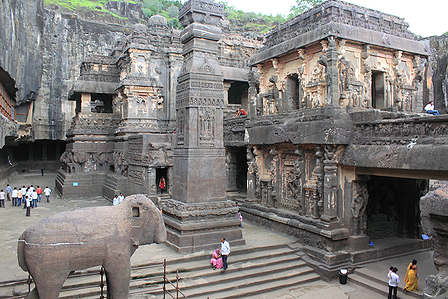
From the 6th cent. on, with the resurgence of Hindu dynasties throughout India, a characteristic temple plan was developed. An entrance portico led to a pillared hall (mandapa) into the cella. The shrine was often crowned by a large tower known as the shikhara. In S India the Dravida tower rose in a series of terraces, each symbolizing a different divinity; in the north, nagara spires ascended in a massive conical shape.

Innumerable temples were built that were so exuberantly embellished with sculpture that their style is called "sculptural architecture." The Khajuraho temples in central India (c.1000) represent one of the high points of the nagara buildings, and the damaged Temple of the Sun at Konarak (c.1250) reveals, in its famous erotic sculptures, carvings that combine balanced mass with delicate execution. The Jain temples at Mt. Abu, constructed entirely of imported white marble and dating from the 10th and 13th cent., have plain exteriors but are ornately carved inside.

In S India the 7th-century Pallava dynasty introduced the dravida style temple in a number of pyramidal raths (temples) at Mahabalipuram; an enormous cliff-face at the site is carved with a life-size representation of gods, men, and beasts, including the elephant family. The dravida style plan was used also in the 8th cent. in the quarried temple at Ellora. The Chola dynasty of S India further developed this form in the 11th cent., when they probably also cast most of large numbers of S Indian bronzes, of which the Nataraja (dancing Shiva) images are perhaps the best known.


The dravida style culminated in a series of expanded "temple townships," of which the largest is Srirangam, consisting of seven concentric enclosures. These ended in the comparatively crude stucco sculptured architecture of 17th-century Mandura. Medieval bronze sculpture was highly developed in S India. The chief subjects were the deities, figures of whom were used for processional and home ritual. Skilled cire-perdue sculptures were produced until the late 19th cent. in many regions of India.

Indian Painting

Adverse climate and other conditions have injured what wall painting existed. The most famous surviving Buddhist paintings are from the caves at Ajanta. Little is known of Hindu wall painting except for fragments at Ellora and Tanjore (see Thanjavur). The earliest Indian manuscript paintings are Buddhist, of the Pala dynasty; they have a delicate color. The 13th- to 15th-century Jain manuscript illuminations, painted in vivid red, blue, and gold, are most easily recognized by the characteristic protruding farther eye. Rajput miniature painting, which was practiced in N India from the 16th through the 19th cent., is related both to Mughal painting and to earlier Indian styles. It illustrates a variety of Hindu subjects: the ragamala series (musical modes), the legendary epics and romances, and particularly Krishna's deeds. Rajput painting is characterized by lyrical landscapes, sinuous grace in the depiction of the human form, and an interest in perspective.

The Modern Era

Little of the glorious tradition of Indian artistic achievement survived British rule. Indian artists adapted Western techniques and produced gouache paintings to suit the tastes of European buyers. Patua scrolls, containing swiftly executed watercolor illustrations of many subjects, became one source for the revival of Indian themes during the 20th cent. A growing nationalist sentiment pervaded Indian art in the early decades of the 20th cent. along with the conscious assimilation of Western styles. Major modern artists include Abanindranath Tagore, Nandalal Bose, Jamini Roy, Amrita Sher Gil, N. S. Bendre, M. B. Samant, Francis Souza, Bhagwan Kapoor, M. F. Husain, Bhupen Khakhar, Ram Kinker, Dhanraj Bhagat, Amar Nath Seghal, Chintamoni Kar, and Amina Ahmad.


Like all other aspects, colonization of Indian also had an impact on architecture style. With colonization, a new chapter in Indian architecture began. The Dutch, Portuguese and the French made their presence felt through their buildings but it was the English who had a lasting impact on architecture.